

Hey there! As a supplier of PVC coated gloves, I often get asked about how these gloves manage to resist tearing. It's a question that's not only important for those in industries where glove durability is key but also for anyone looking to understand the science behind their protective gear. So, let's dive right in and explore the factors that make PVC coated gloves such tough performers.
The Basics of PVC Coated Gloves
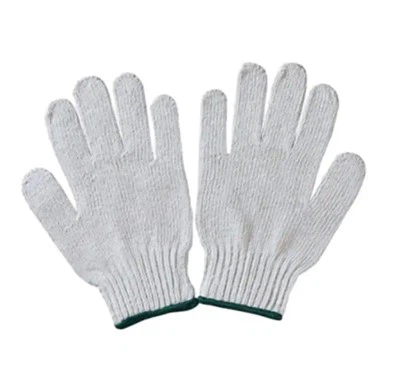
First off, let's talk about what PVC coated gloves are. These gloves typically have a base layer, often made of materials like 100% Cotton Work Gloves, which provides a comfortable fit and some level of flexibility. The PVC coating is then applied to this base layer, adding an extra layer of protection. PVC, or polyvinyl chloride, is a synthetic plastic polymer that's known for its strength and resistance to various elements.
The Structure of PVC Coating
The PVC coating on these gloves isn't just a simple layer. It's designed with a specific structure that contributes to its tear resistance. The coating is usually applied in multiple layers, with each layer serving a different purpose. The outer layer is often more rigid and provides a barrier against sharp objects and abrasion. It's like a shield that takes the brunt of the wear and tear.
Underneath the outer layer, there are often intermediate layers that help to distribute the stress evenly across the glove. When a sharp object tries to tear through the glove, these intermediate layers work together to prevent the tear from spreading. They act like a web, holding the glove together and stopping the damage from getting worse.
Chemical Properties of PVC
The chemical properties of PVC also play a big role in its tear resistance. PVC is a thermoplastic, which means it can be melted and reshaped when heated. During the manufacturing process, the PVC is heated and molded onto the base glove. This process creates strong chemical bonds between the PVC molecules, making the coating tough and resistant to tearing.
PVC also has good elasticity. It can stretch to a certain extent without breaking. This elasticity allows the glove to conform to the shape of the hand and move with it during use. When a force is applied to the glove, the PVC coating can stretch and absorb the energy, reducing the risk of tearing.
Reinforcement Techniques
In addition to the structure and chemical properties of the PVC coating, many PVC coated gloves also use reinforcement techniques to enhance their tear resistance. For example, some gloves have a special stitching pattern on the seams. These stitches are designed to be strong and durable, preventing the seams from coming apart under stress.

Another common reinforcement technique is the use of additional layers of material in high-stress areas. For example, the fingertips and palms of the gloves are often the areas that experience the most wear and tear. To make these areas more tear-resistant, extra layers of PVC or other reinforcing materials may be added.
Testing and Quality Control
As a supplier, we take testing and quality control very seriously. Before our PVC coated gloves are sent out to customers, they go through a series of rigorous tests to ensure they meet our high standards for tear resistance.
One of the most common tests is the puncture resistance test. In this test, a sharp object is used to try and puncture the glove. The force required to puncture the glove is measured, and if it meets or exceeds our specified standards, the glove passes the test.
We also conduct tear strength tests. In these tests, a sample of the glove is pulled until it tears, and the amount of force required to tear the glove is recorded. This helps us to ensure that our gloves are strong enough to withstand the demands of real-world use.
Comparison with Other Gloves
When it comes to tear resistance, PVC coated gloves often outperform other types of gloves. For example, compared to Oil-proof Nitrile Gloves, PVC coated gloves generally have better tear resistance in high-abrasion environments. Nitrile gloves are great for their chemical resistance and flexibility, but they may not be as tough when it comes to sharp objects and rough surfaces.
On the other hand, 100% Cotton Work Gloves are comfortable and breathable, but they lack the tear resistance of PVC coated gloves. Cotton is a natural fiber that can be easily torn, especially when exposed to sharp objects or heavy use.
Applications of PVC Coated Gloves
The tear resistance of PVC coated gloves makes them suitable for a wide range of applications. They are commonly used in industries such as construction, manufacturing, and automotive. In construction, workers need gloves that can protect their hands from sharp nails, rough building materials, and power tools. PVC coated gloves provide the necessary tear resistance to keep their hands safe.
In manufacturing, workers often handle sharp parts and tools. The tear resistance of PVC coated gloves helps to prevent injuries and keep the production process running smoothly. And in the automotive industry, mechanics need gloves that can withstand the rigors of working on engines and other parts. PVC coated gloves are up to the task, providing both protection and dexterity.
Contact for Purchase and Negotiation
If you're in the market for high-quality PVC coated gloves, I'd love to hear from you. Whether you're a small business looking for a reliable supply of gloves or a large corporation with specific requirements, we can work together to find the right solution for you. Our PVC coated gloves are not only tear-resistant but also comfortable to wear and designed to meet the highest safety standards.
Feel free to reach out to us to discuss your needs and get a quote. We're always happy to have a chat and see how we can help you keep your hands safe on the job. You can check out our PVC Coated Gloves on our website to learn more about our products.
References
- "Hand Protection: A Guide to Selecting the Right Gloves" by Occupational Safety and Health Administration (OSHA)
- "The Science of Polymer Materials" by John M. Hutchinson
- "Manufacturing Processes for Plastics" by O. Olabisi


