

As an abrasives supplier, I've witnessed firsthand the diverse needs and applications of different types of abrasives in various industries. Two of the most commonly used types are coated abrasives and bonded abrasives. Each has its unique characteristics, advantages, and applications. In this blog, I'll delve into the differences between these two types of abrasives to help you make informed decisions for your specific needs.
Physical Structure
The most obvious difference between coated abrasives and bonded abrasives lies in their physical structure. Coated abrasives consist of abrasive grains that are bonded to a flexible backing material, such as paper, cloth, or film. This backing provides support and flexibility, allowing the abrasive to conform to different shapes and surfaces. The abrasive grains are typically applied to the backing in a single layer, which is then coated with a bonding agent to hold them in place.
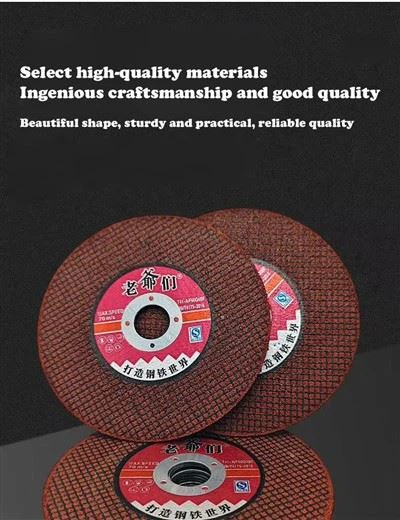
On the other hand, bonded abrasives are made by bonding abrasive grains together with a bonding material, such as resin, vitrified (glass-like), or metal. The bonding material holds the abrasive grains in a rigid structure, forming a solid, three-dimensional shape. Bonded abrasives come in various forms, including wheels, discs, blocks, and sticks, and they are used for grinding, cutting, and polishing operations.
Abrasive Grains and Bonding Agents
The choice of abrasive grains and bonding agents also differs between coated and bonded abrasives. Coated abrasives use a wide range of abrasive grains, including aluminum oxide, silicon carbide, zirconia alumina, and ceramic alumina. Each type of abrasive grain has its own unique properties, such as hardness, toughness, and cutting ability, which make it suitable for different applications. For example, aluminum oxide is a versatile abrasive that is commonly used for general-purpose sanding and finishing, while silicon carbide is a harder and more brittle abrasive that is ideal for sanding hard materials, such as metal and glass.
The bonding agents used in coated abrasives are typically organic resins, such as phenolic, epoxy, or urethane. These resins provide a strong bond between the abrasive grains and the backing material, while also allowing for some flexibility and resilience. The type of bonding agent used depends on the application and the desired performance of the coated abrasive.
In bonded abrasives, the choice of abrasive grains and bonding agents is also crucial. The most common abrasive grains used in bonded abrasives are aluminum oxide, silicon carbide, and cubic boron nitride (CBN). CBN is a synthetic abrasive that is extremely hard and wear-resistant, making it suitable for grinding hard materials, such as high-speed steel and carbide.
The bonding agents used in bonded abrasives can be either organic or inorganic. Organic bonding agents, such as resin and rubber, are commonly used for applications that require flexibility and shock resistance. Inorganic bonding agents, such as vitrified and metal, are used for applications that require high precision and durability.
Applications
Coated abrasives and bonded abrasives are used for different applications based on their physical structure, abrasive grains, and bonding agents. Coated abrasives are primarily used for sanding, finishing, and polishing operations. They are suitable for a wide range of materials, including wood, metal, plastic, and composites. Coated abrasives are available in various grit sizes, from coarse to fine, allowing for different levels of material removal and surface finish.
Some common applications of coated abrasives include:

- Woodworking: Sanding and finishing wood surfaces to remove roughness, smooth edges, and prepare the surface for painting or staining.
- Metalworking: Sanding and polishing metal surfaces to remove rust, scale, and burrs, and to prepare the surface for plating or painting.
- Automotive: Sanding and finishing automotive body panels to remove scratches, dents, and paint imperfections, and to prepare the surface for repainting.
- Furniture: Sanding and finishing furniture surfaces to remove rough spots, smooth edges, and prepare the surface for staining or painting.
Bonded abrasives, on the other hand, are primarily used for grinding, cutting, and shaping operations. They are suitable for a wide range of materials, including metal, stone, ceramic, and glass. Bonded abrasives are available in various shapes and sizes, including wheels, discs, blocks, and sticks, and they are used for different applications, such as surface grinding, cylindrical grinding, centerless grinding, and cutting.
Some common applications of bonded abrasives include:
- Metalworking: Grinding and cutting metal parts to remove excess material, shape the part, and improve the surface finish.
- Stoneworking: Grinding and polishing stone surfaces to remove roughness, smooth edges, and prepare the surface for installation.
- Ceramic and Glassworking: Grinding and cutting ceramic and glass parts to shape the part, remove excess material, and improve the surface finish.
- Toolmaking: Grinding and sharpening cutting tools, such as drills, end mills, and saw blades, to improve their cutting performance and extend their service life.
Advantages and Disadvantages
Both coated and bonded abrasives have their own advantages and disadvantages, which make them suitable for different applications. Coated abrasives offer several advantages, including:
- Flexibility: Coated abrasives are flexible and can conform to different shapes and surfaces, making them suitable for sanding and finishing operations on curved and irregular surfaces.
- Versatility: Coated abrasives are available in a wide range of grit sizes and abrasive grains, allowing for different levels of material removal and surface finish.
- Ease of Use: Coated abrasives are easy to use and can be applied by hand or with a power tool. They are also available in various forms, such as sheets, discs, and belts, which make them convenient for different applications.
However, coated abrasives also have some disadvantages, including:
- Limited Durability: Coated abrasives have a limited lifespan and need to be replaced frequently, especially when used for heavy-duty applications.
- Not Suitable for High-Pressure Applications: Coated abrasives are not suitable for high-pressure applications, such as grinding and cutting, as they can delaminate or break under high pressure.
Bonded abrasives offer several advantages, including:
- High Durability: Bonded abrasives are more durable than coated abrasives and can withstand high pressures and temperatures, making them suitable for heavy-duty applications.
- Precision Grinding: Bonded abrasives are used for precision grinding operations, such as surface grinding and cylindrical grinding, where high accuracy and surface finish are required.
- Long Service Life: Bonded abrasives have a long service life and can be used for multiple operations before they need to be replaced.
However, bonded abrasives also have some disadvantages, including:
- Limited Flexibility: Bonded abrasives are rigid and cannot conform to different shapes and surfaces, making them unsuitable for sanding and finishing operations on curved and irregular surfaces.
- Higher Cost: Bonded abrasives are generally more expensive than coated abrasives, especially when using high-performance abrasive grains and bonding agents.
Conclusion
In conclusion, coated abrasives and bonded abrasives are two different types of abrasives that have their own unique characteristics, advantages, and applications. Coated abrasives are flexible, versatile, and easy to use, and they are primarily used for sanding, finishing, and polishing operations. Bonded abrasives are rigid, durable, and suitable for high-pressure applications, and they are primarily used for grinding, cutting, and shaping operations.
As an abrasives supplier, I understand the importance of choosing the right type of abrasive for your specific application. That's why I offer a wide range of coated and bonded abrasives to meet the diverse needs of my customers. Whether you need a 6-Hole Sandpaper Disc for sanding wood, a Grinder Cutting Disc for Aluminium for cutting metal, or a Metal Polishing Wheel for Grinder for polishing metal surfaces, I have the right abrasive for you.
If you have any questions or need help choosing the right abrasive for your application, please don't hesitate to contact me. I'm here to provide you with the best advice and solutions to meet your needs. Let's start a conversation and find the perfect abrasives for your next project.
References
- Boothroyd, G., & Knight, W. A. (2006). Fundamentals of machining and machine tools. CRC Press.
- Kalpakjian, S., & Schmid, S. R. (2009). Manufacturing engineering and technology. Pearson Prentice Hall.
- Schey, J. A. (2000). Tribology in metalworking: friction, lubrication, and wear. ASM International.


