

Hey there! As an abrasives supplier, I've been in the thick of the construction industry for quite some time. Abrasives are like the unsung heroes in construction projects, playing a crucial role in shaping, finishing, and maintaining various materials. In this blog, I'll walk you through the different types of abrasives commonly used in the construction world.
1. Grinding Wheels
Grinding wheels are one of the most widely used abrasives in construction. They're used for grinding, cutting, and shaping hard materials like metal, concrete, and stone. These wheels come in different shapes and sizes, each designed for specific applications. For example, straight wheels are great for surface grinding, while cup wheels are often used for grinding edges and corners.
The abrasive grains on grinding wheels can be made from various materials, such as aluminum oxide, silicon carbide, and diamond. Aluminum oxide is a popular choice because it's relatively inexpensive and can handle a wide range of materials. Silicon carbide, on the other hand, is more brittle but offers better cutting performance on materials like ceramics and glass. Diamond grinding wheels are the most expensive but also the most effective for grinding hard materials like granite and concrete.
2. Sandpaper and Sanding Discs
Sandpaper and sanding discs are essential for smoothing and finishing surfaces. They come in different grits, which determine the coarseness of the abrasive. Lower grit numbers mean coarser sandpaper, which is used for removing large amounts of material quickly. Higher grit numbers indicate finer sandpaper, which is used for achieving a smooth finish.
In the construction industry, sandpaper and sanding discs are used for preparing surfaces before painting or coating, as well as for finishing wood, metal, and plastic. For example, a 6-Hole Sandpaper Disc is a popular choice for sanding large surfaces. It's designed to fit onto a sander and can be easily replaced when worn out.
3. Saw Blades
Saw blades are used for cutting various materials, including wood, metal, and plastic. There are different types of saw blades available, each designed for specific applications. For example, a Wood Saw Blade For Grinder is designed to be used with a grinder and is ideal for cutting thick pieces of wood.
The teeth on saw blades can be made from different materials, such as carbide, high-speed steel, and diamond. Carbide-tipped saw blades are the most popular because they offer a good balance between durability and cutting performance. High-speed steel saw blades are less expensive but wear out more quickly. Diamond saw blades are the most expensive but offer the longest lifespan and the best cutting performance on hard materials.
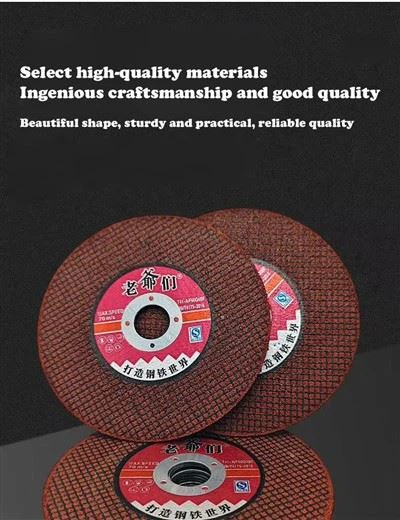

4. Cutting Discs
Cutting discs are used for cutting through metal, concrete, and other hard materials. They're similar to grinding wheels but are designed specifically for cutting. Cutting discs come in different sizes and thicknesses, each designed for specific applications.
The abrasive grains on cutting discs can be made from various materials, such as aluminum oxide, silicon carbide, and diamond. Aluminum oxide cutting discs are the most common because they're relatively inexpensive and can handle a wide range of materials. Silicon carbide cutting discs are more brittle but offer better cutting performance on materials like ceramics and glass. Diamond cutting discs are the most expensive but also the most effective for cutting hard materials like granite and concrete. For example, a Grinder Cutting Disc for Aluminium is designed specifically for cutting aluminum and offers excellent cutting performance.
5. Wire Brushes
Wire brushes are used for cleaning and removing rust, paint, and other contaminants from surfaces. They come in different shapes and sizes, each designed for specific applications. For example, a flat wire brush is great for cleaning large surfaces, while a round wire brush is ideal for cleaning corners and crevices.
The wires on wire brushes can be made from different materials, such as steel, brass, and nylon. Steel wire brushes are the most common because they're durable and can handle tough cleaning jobs. Brass wire brushes are less abrasive and are often used for cleaning delicate surfaces. Nylon wire brushes are the least abrasive and are used for cleaning surfaces that are easily scratched.
6. Abrasive Pads
Abrasive pads are used for polishing and buffing surfaces. They come in different grades, which determine the coarseness of the abrasive. Lower grade pads are used for removing scratches and other imperfections, while higher grade pads are used for achieving a high-gloss finish.
In the construction industry, abrasive pads are used for polishing floors, countertops, and other surfaces. They're often used in conjunction with a polishing machine to achieve a professional-looking finish.
Why Choose Our Abrasives?
As an abrasives supplier, we understand the importance of providing high-quality products at competitive prices. Our abrasives are made from the best materials and are designed to meet the needs of the construction industry. We offer a wide range of abrasives, including grinding wheels, sandpaper, saw blades, cutting discs, wire brushes, and abrasive pads.
Our products are tested and certified to ensure they meet the highest standards of quality and performance. We also offer excellent customer service and technical support to help you choose the right abrasives for your specific application.
If you're in the construction industry and are looking for high-quality abrasives, look no further. Contact us today to discuss your requirements and let us help you find the perfect abrasives for your project. Whether you're a small contractor or a large construction company, we have the products and expertise to meet your needs.
References
- "Handbook of Abrasive Technology" by Ramesh Singh
- "Abrasive Machining: Processes and Technology" by Y. Altintas and M. Brecher


