

Resin-bonded abrasives are a key player in the world of abrasives, and as a supplier in this field, I'm super excited to share all about them with you.
Let's start with the basics. Resin-bonded abrasives are made by using resin as a bonding agent to hold abrasive grains together. The resin acts like a glue that keeps the abrasive particles firmly in place, allowing them to do their job effectively. This type of abrasive has been around for a while and has become increasingly popular due to its many advantages.

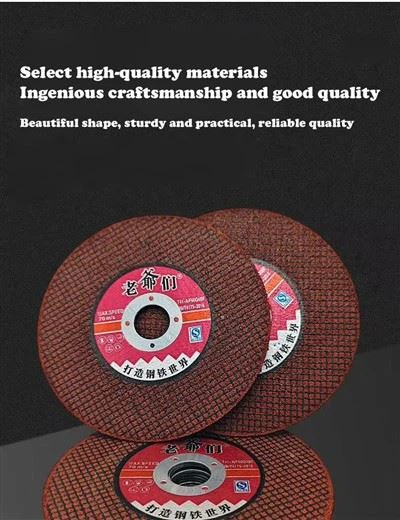
One of the biggest perks of resin-bonded abrasives is their versatility. They can be used for a wide range of applications, from metalworking to woodworking and even in the automotive industry. Whether you're grinding, polishing, or cutting, there's a resin-bonded abrasive that can get the job done. For instance, if you're looking to polish metal, a Metal Polishing Wheel for Grinder made with resin-bonded technology can give you a smooth and shiny finish. The resin holds the abrasive grains in a way that allows for consistent contact with the metal surface, resulting in an even polish.
Another great thing about resin-bonded abrasives is their durability. The resin bonding provides a strong and stable structure for the abrasive grains. This means that the abrasives can withstand high pressures and temperatures without breaking down easily. When you're using a Grinder Cutting Disc for Aluminium, for example, the resin-bonded design ensures that the disc maintains its shape and cutting ability even when cutting through tough aluminum materials. This durability not only saves you money in the long run but also increases productivity as you don't have to replace the abrasives as frequently.
The manufacturing process of resin-bonded abrasives is quite interesting. First, the abrasive grains are carefully selected based on the intended application. Different types of abrasive grains, such as aluminum oxide or silicon carbide, have different properties and are suitable for different tasks. Once the grains are chosen, they are mixed with the resin. The resin can be in liquid or powder form, depending on the manufacturing method. The mixture is then shaped into the desired form, like a wheel or a disc. After that, it goes through a curing process, which involves heating the shaped abrasive to a specific temperature for a certain period of time. This curing step is crucial as it hardens the resin and gives the abrasive its final strength and performance characteristics.
In terms of performance, resin-bonded abrasives offer excellent cutting and grinding efficiency. The resin helps to control the wear rate of the abrasive grains. As the abrasives work on a surface, the grains gradually wear down, but the resin ensures that this wear is uniform. This means that the cutting or grinding action remains consistent throughout the life of the abrasive. Take a 6-Hole Sandpaper Disc for example. The resin-bonded sandpaper provides a smooth and efficient sanding experience. The uniform wear of the abrasive grains allows for a consistent removal of material, leaving a smooth surface on the workpiece.
Resin-bonded abrasives also have good heat resistance. During grinding and cutting operations, a lot of heat is generated. If the abrasive can't handle the heat, it can lose its effectiveness or even break down. The resin in resin-bonded abrasives acts as a heat insulator to some extent, protecting the abrasive grains from excessive heat. This heat resistance is especially important when working with hard materials or at high speeds. For example, when grinding stainless steel, a resin-bonded grinding wheel can maintain its cutting ability even under the high heat generated by the hard metal.
Now, let's talk about the different types of resin-bonded abrasives. There are resin-bonded grinding wheels, which come in various shapes and sizes for different grinding tasks. They can be used for surface grinding, cylindrical grinding, and more. Resin-bonded cutting discs are also very common. These are used for cutting through different materials, like metals, plastics, and ceramics. And then there are resin-bonded sanding belts and discs, which are great for finishing and smoothing surfaces.
When it comes to choosing the right resin-bonded abrasive for your needs, there are a few factors to consider. First, think about the material you'll be working on. Different materials require different types of abrasive grains and bonding strengths. For example, softer materials may need a less aggressive abrasive, while harder materials need a more durable and aggressive one. Also, consider the type of operation you'll be doing, whether it's grinding, cutting, or polishing. The speed and pressure of the operation are also important. Higher speeds and pressures may require a more robust resin-bonded abrasive.
As an abrasives supplier, I've seen firsthand the benefits that resin-bonded abrasives bring to various industries. They've revolutionized the way we work with different materials, making our jobs easier, faster, and more efficient. Whether you're a professional in a large manufacturing plant or a DIY enthusiast working on a home project, resin-bonded abrasives can be a great addition to your toolkit.
If you're interested in purchasing resin-bonded abrasives or any other abrasives we offer, we'd love to have a chat with you. We can help you find the perfect products for your specific needs and answer any questions you might have. So, don't hesitate to reach out and start a conversation about your abrasives requirements.
References
- Abrasives Manufacturing Handbook
- Industrial Abrasive Technology Guide


