Hey there! As a supplier of gumboot rain boots, I often get asked a bunch of questions. One question that pops up quite a bit is, "Do gumboots protect against chemicals?" Well, let's dig into this topic and find out.
First off, let's understand what gumboots are. Gumboots, also known as rain boots, are typically made of rubber, PVC, or other waterproof materials. They're designed to keep your feet dry in wet conditions, like when it's raining or when you're walking through puddles. But when it comes to chemicals, things get a bit more complicated.
The ability of gumboots to protect against chemicals depends on several factors. One of the most important factors is the type of material the gumboots are made of. Different materials have different levels of resistance to chemicals.
Rubber gumboots are a popular choice. Natural rubber has some resistance to a variety of chemicals, but it's not impervious. For example, it can resist water - based chemicals and some mild acids and alkalis. However, it can be damaged by solvents like benzene, toluene, and gasoline. When rubber comes into contact with these solvents, it can swell, lose its strength, and eventually break down. This means that if you're working in an environment where you're likely to come into contact with these solvents, rubber gumboots may not provide adequate protection.
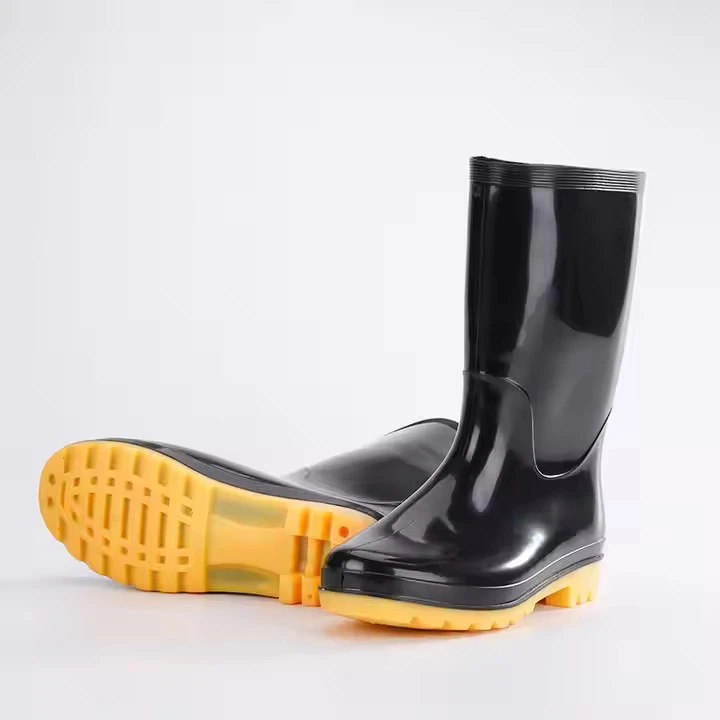
On the other hand, PVC (polyvinyl chloride) gumboots offer better resistance to some chemicals compared to natural rubber. PVC is more resistant to oils, greases, and many solvents. If you're in an industrial setting where you're dealing with these substances, PVC Rain Boots could be a better option. They form a barrier that can prevent the chemicals from reaching your feet.
Another factor is the thickness of the material. Thicker gumboots generally provide better protection than thinner ones. A thicker layer of rubber or PVC can take longer for chemicals to penetrate. However, thicker gumboots can also be heavier and less comfortable to wear for long periods. So, it's a bit of a trade - off between protection and comfort.
The duration of exposure also matters. Even if a gumboot is resistant to a certain chemical, prolonged exposure can still lead to problems. For example, if you accidentally spill a small amount of a chemical on your gumboot and quickly wipe it off, the gumboot may be fine. But if you're constantly standing in a pool of chemicals, the chances of the chemical seeping through the material increase over time.

The type of chemical is crucial. Some chemicals are more aggressive than others. Strong acids and alkalis can react with the material of the gumboot and cause it to degrade rapidly. Oxidizing agents can also break down the molecular structure of rubber and PVC. So, before choosing gumboots for a chemical - exposed environment, you need to know exactly what chemicals you're dealing with.
Now, let's talk about the different types of gumboots we offer. Our Mid Length Rain Boots are great for general use. They're made of high - quality rubber that provides decent protection against water and some mild chemicals. They're comfortable to wear and are suitable for light outdoor work or walking in the rain.
If you're looking for something more heavy - duty, our Waterproof Rubber Steel Toe Work Boots are a great choice. The steel toe provides an extra layer of protection for your toes, which is important in industrial settings. The rubber material is thick and durable, offering good protection against a range of chemicals, as long as they're not extremely aggressive solvents.
It's also important to note that gumboots are just one part of a comprehensive safety plan. When working in a chemical - exposed environment, you should also wear other protective gear like gloves, goggles, and a chemical - resistant suit. And always follow the safety guidelines provided by your employer or the chemical manufacturer.
In conclusion, gumboots can offer some protection against chemicals, but it's not a one - size - fits - all solution. You need to consider the type of material, thickness, duration of exposure, and the type of chemical. If you're unsure about which gumboots are right for your specific situation, don't hesitate to reach out. We're here to help you make the best choice for your safety and comfort.
If you're interested in purchasing gumboot rain boots for your business or personal use, we'd love to have a chat with you. We can discuss your specific needs, answer any questions you may have, and provide you with a quote. Just let us know what you're looking for, and we'll do our best to assist you.
References
- "Handbook of Chemical Resistance of Polymers"
- "Occupational Safety and Health Guidelines for Chemical Handling"